The What, Why, and Where of Sunsetting a Product
Breakups are hard. It takes bravery to end a relationship, but that clear vision is often clouded by the fear of what comes next. In business, this fear leads to a dangerous stagnation.
Are you the sort of person who tolerates the bare minimum? Are you keeping customers on the hook with a less-than-adequate product experience just to avoid a difficult conversation? Or are you trapped in the fallacy that if even one person is still using a service, you are obligated to keep it going?
Tidying up the digital waste of your product offering is essential. Portfolio clarity is a requirement for brand trust, not just a way to save money.
The High Cost of the "Yes"
During my time working within large, successful corporations, I saw firsthand how difficult it was for leadership to say "No." It is easy to say "Yes" to novel, new, and often wacky ideas. But without a corresponding "No," you fall victim to Portfolio Creep.
Even the giants are victims:
Apple (1997): Before Steve Jobs returned, Apple nearly collapsed because they couldn’t kill bad products. They were stretched thin making printers and cameras, creating an inventory and logistical nightmare.
Microsoft (2000–2010): Under Steve Ballmer, Windows fractured into a dizzying quantity of variants and redundant ecosystems like Zune. Office became so bloated it grew heavy and slow.
The Psychology of "Featureitis" and the Inverted U
Why do these giants fail to stop? It’s often due to a misunderstanding of the Inverted U of Utility. This isn't a single law drafted in a lab, but an application of the Yerkes-Dodson Law (1908) to modern software.
Psychologists Robert Yerkes and John Dodson discovered that performance increases with mental arousal, but only up to a point. In digital products, when the stimulus—the number of features—becomes too high, user satisfaction plummets. Don Norman, one of the "fathers" of UX, famously called this "featureitis."
Norman argued that while consumers think they want more features at the point of purchase, they actually want simplicity at the point of use. When companies ignore the downward slope of the Inverted U, they stop providing utility and start creating a burden. To fix this, we need to stop adding and start subtracting.
Systematic Abandonment: The Drucker Way
How often should you think about endings? Management legend Peter Drucker argued for Systematic Abandonment. The purpose of sunsetting is not just to save money, but to free up your best resources—especially your high-performing people—from "yesterday's breadwinners" so they can focus on creating the future.
Drucker demanded immediate action: If you wouldn't start this product today, why are you still doing it?
Where to Start: The BCG Matrix
To practice Endineering, you must first identify what deserves to end. The BCG Growth Share Matrix helps you visualise where your energy is being wasted by splitting your portfolio into four quadrants:
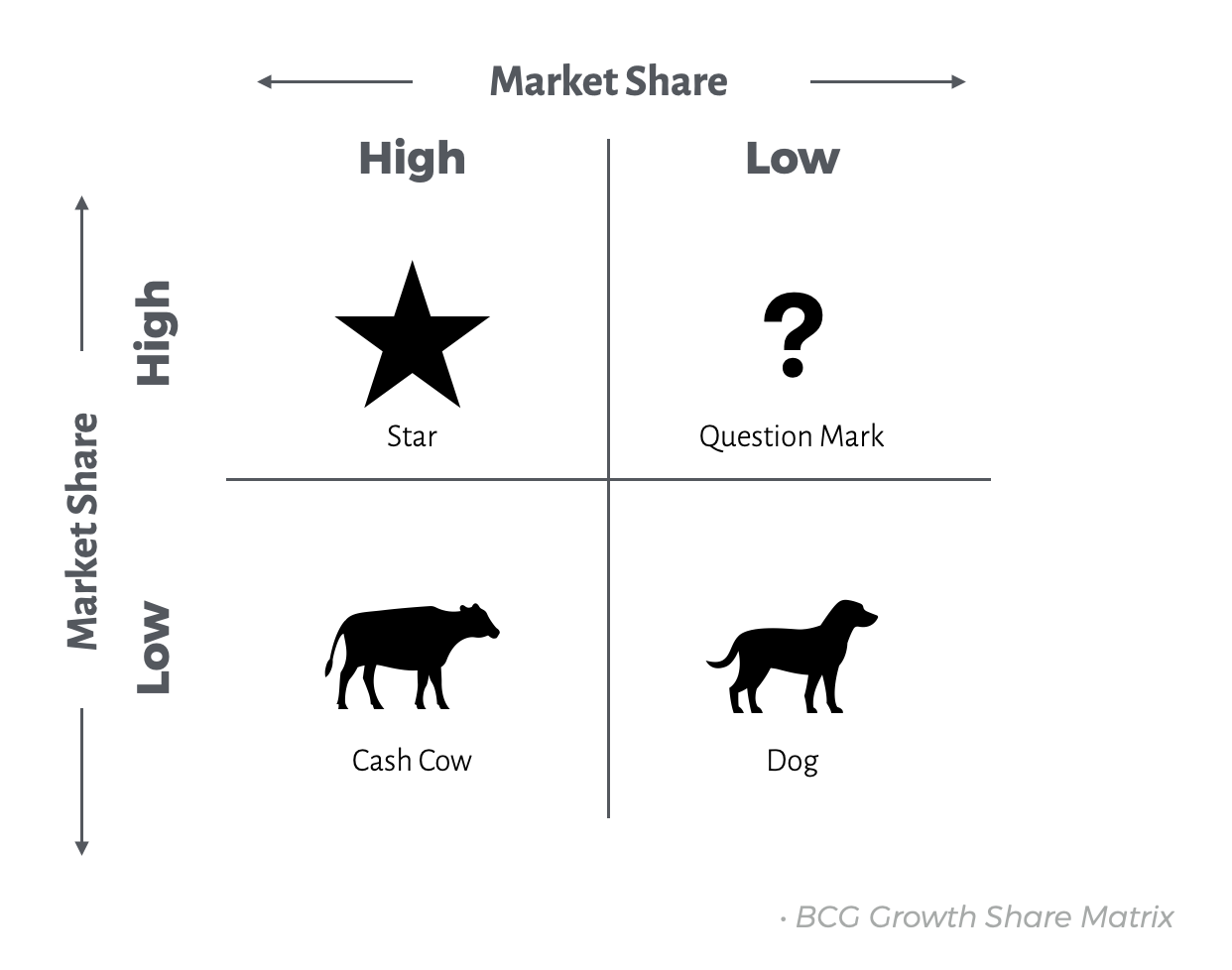
BCG Growth Share Matrix
Stars & Cash Cows: Your future and your funding.
Question Marks: Invest or discard—quickly.
Pets (The Dogs): These have low market share and low growth. These are the ones you want to end. In digital products, "Pets" often turn into Zombies—unsupported and unloved. To build a healthy brand, you must liquidate or reposition these "Pets" to make room for the next "Hello."
Key Takeaways
The Inverted U: More features do not equal more value. Past a certain point, "featureitis" kills user satisfaction.
Systematic Abandonment: Sunsetting is a strategic tool to redirect your best talent toward innovation rather than maintaining "yesterday's breadwinners."
Kill the "Pets": Use the BCG Matrix to identify low-value products. If it’s a "Pet," design an ending immediately.
Endings = Trust: A clean, purposeful sunset builds more brand equity than a lingering, unsupported "Zombie" product.