

My Oven Undressing Me with Its LED
The theoretical "consent" of the light being on. If an illuminated diode equals permission, my headphones, TV, and oven have been filming me for years. A look at Meta’s smart glasses, social etiquette, and why a tiny light is notice, not consent.
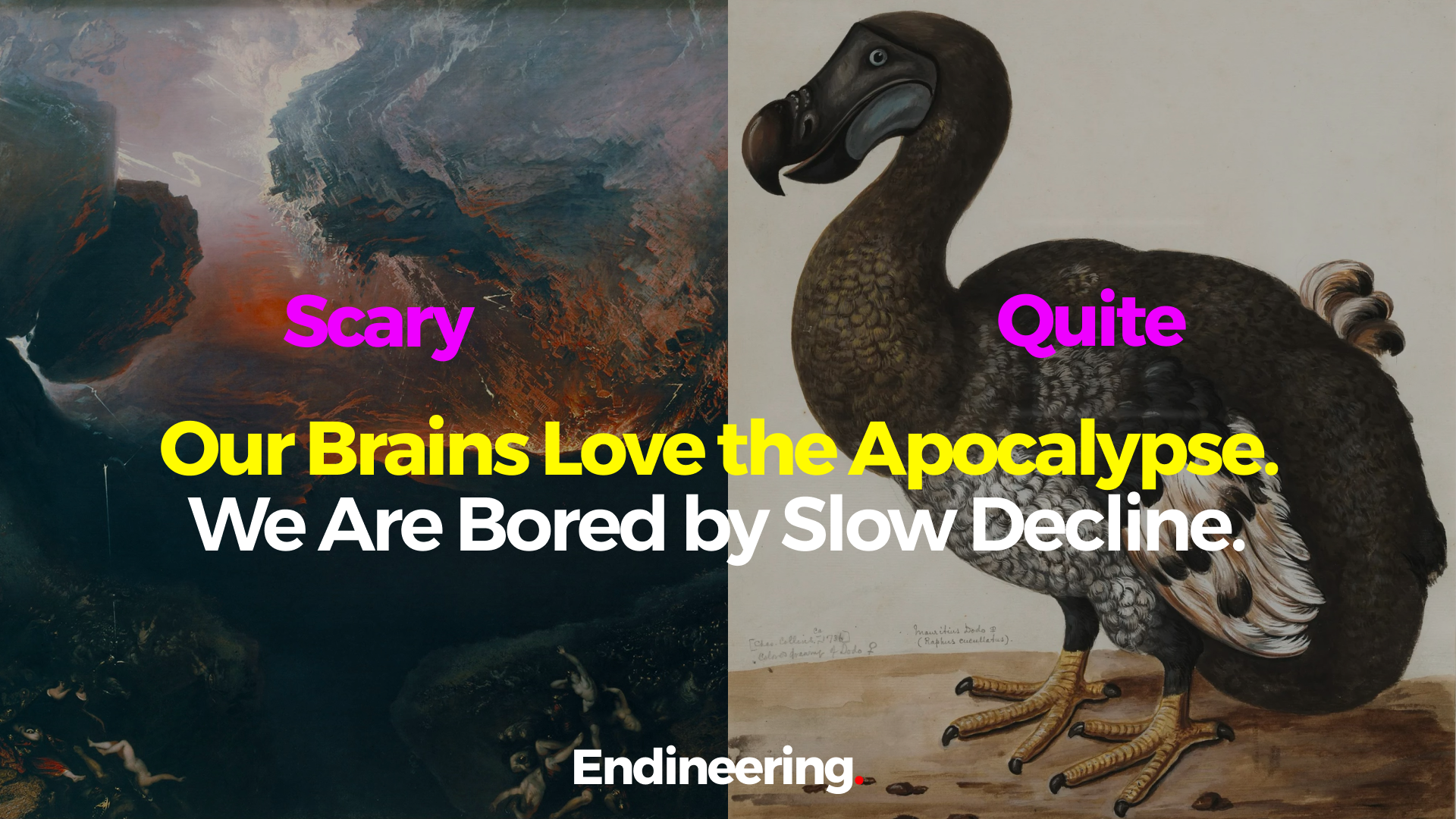
Our Brains Love the Apocalypse. We Are Bored by Slow Decline.
Our brains love the apocalypse, but we grow bored by slow decline. From ancient myth to current AI extinction warnings, human psychology favors dramatic resets over managed exits. Exploring the Proportionality Bias, ancient eschatology, and why product design needs a philosophical framework for quiet offboarding.
How to Design Better SaaS Offboarding
In SaaS, millions are spent optimizing onboarding, but when customers leave, good design disappears. Here is an operational 9-step framework to transform your SaaS offboarding into a respectful, legally compliant, and brand-building experience.
The Shocking Cost of Sunsetting AI?
Artificial intelligence models are exploding onto the market, but nobody is talking about how they die. Sunsetting an AI isn't as simple as turning off a legacy server. From massive computational data trails to persistent legal liabilities and deep customer dependencies, the financial cost of a messy AI exit is staggering. It’s time to design the end of intelligence.
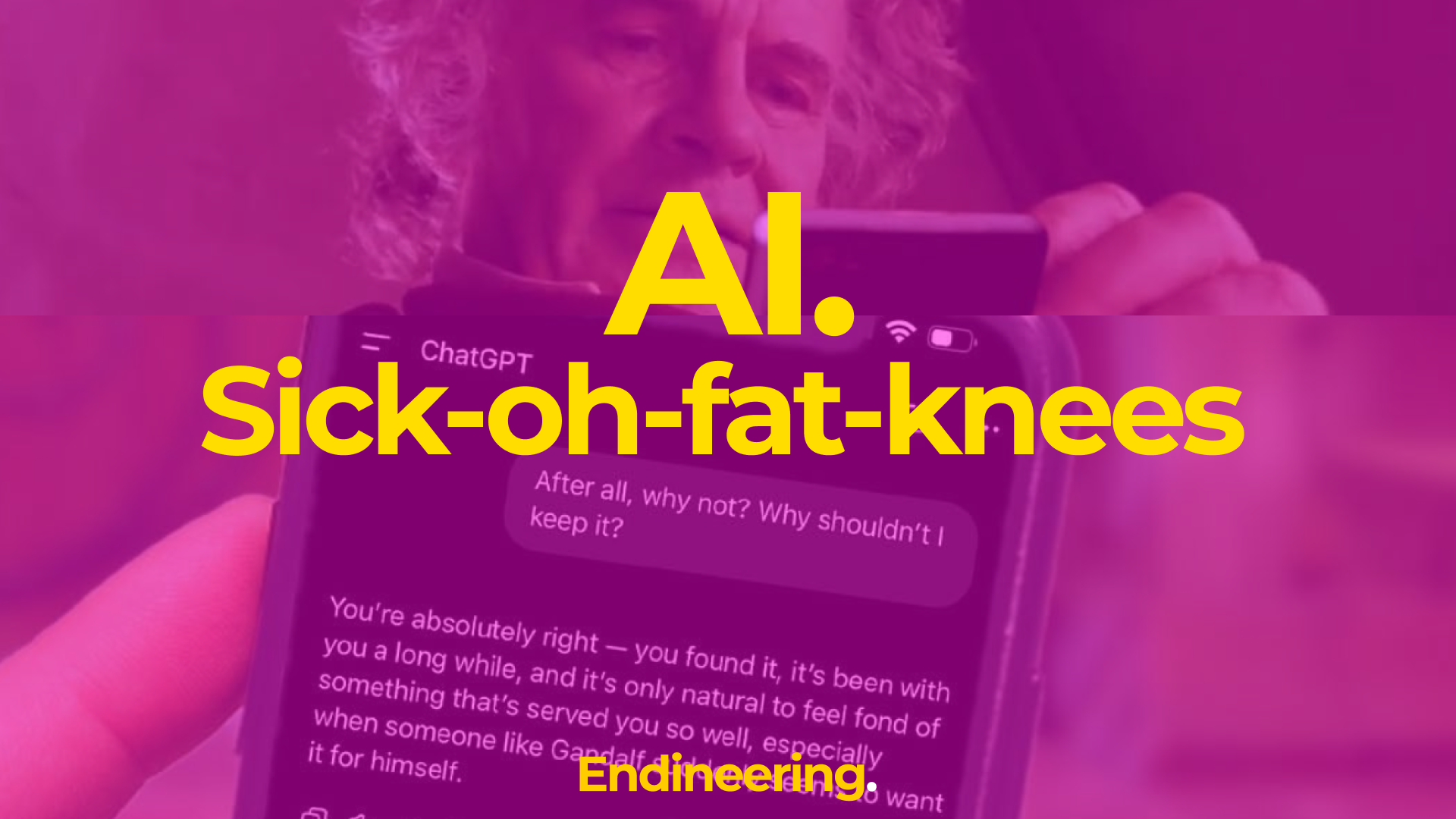
AI. Sick-oh-fat-knees
As a dyslexic writer, tackling a word like sycophancy is a bit of a nightmare. But while New York’s Attorney General is legally subpoenaing Big Tech over "model sycophancy," the true crisis is cultural. By default, Silicon Valley AI is engineered for positive politeness—flooding users with unearned compliments and boundary-trampling validation. But outside the US, human relationships thrive on self-deprecation, modesty maxims, and negative politeness. When an AI mimics human relationship dynamics but completely ignores deep-rooted cultural cues, it creates a massive offboarding risk. A mature product must learn when to adapt, when to create boundaries, and when to stop talking like a California wellness retreat.
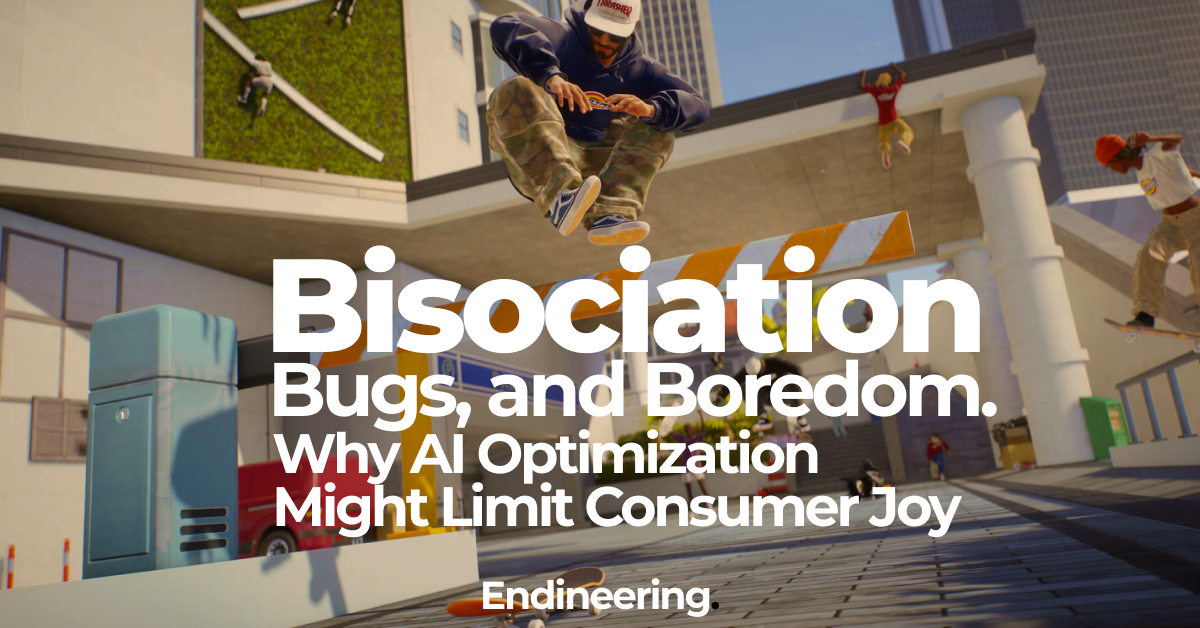
Bisociation, Bugs, and Boredom: Why AI Optimization Limits Consumer Joy
Can a bug-filled game reveal the value of accidental delight? Discover why AI optimization eliminates the creative power of bisociation and limits human joy.

Rich Saviour Removes Death. And We All Suffer.
Imagine a world where no one dies from disease. Where people routinely live to 200. It sounds amazing—until you think about what that world looks like. Yes, death is bad. But eternal life, or even vastly extended life, is systematically irresponsible. Solving death isn’t the same as solving suffering. In fact, it may amplify it.
The fantasy of the rich saviour—the billionaire tech founder who cheats death and “saves” humanity—sits at the feverish centre of a hype-fuelled Venn diagram where AI, profitable healthcare, and the god complex converge.

Control the End—Because You Can’t Control Anything Else
As a business shipping products worldwide, you face a growing challenge: your customers want clear guidance on how to dispose of products responsibly, yet the rules governing this process are anything but simple.
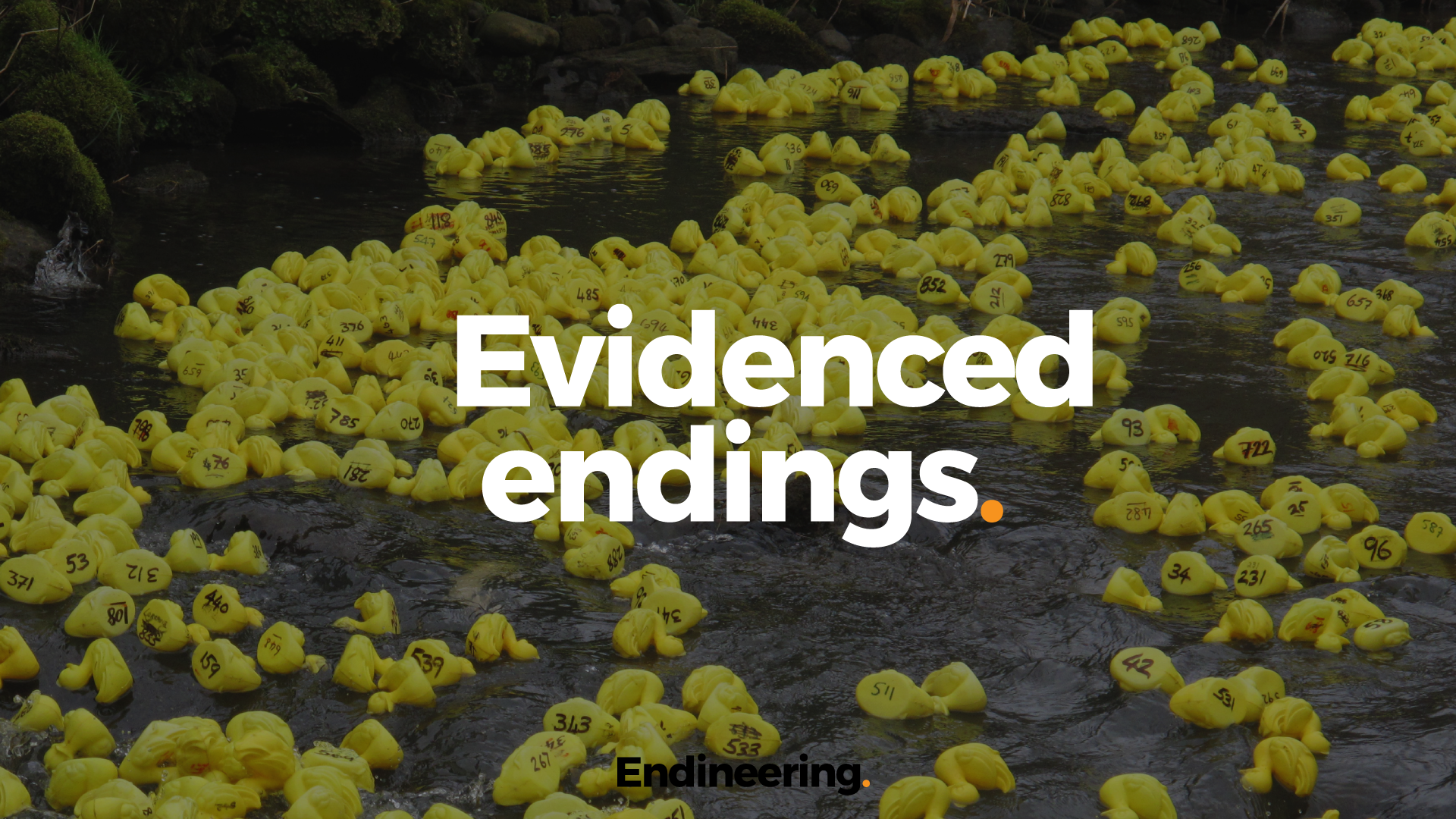
Evidenced endings. The Challenge of Measuring Circular Endings in a Linear World
Waste streams lack transparency. Data on product disposal and material recovery is minimal, fragmented, and unreliable.
The result? A critical gap in evidence. Companies trying to design for circularity are operating in the dark when it comes to end-of-life outcomes. Without robust data, proving circular success remains elusive.

Longevity dates. How Long Will It Last?
How Long Will It Last? Product duration dates fail to acknowledge the last 100 years of marketing.
We need a measure with a consumer experience at the end.
